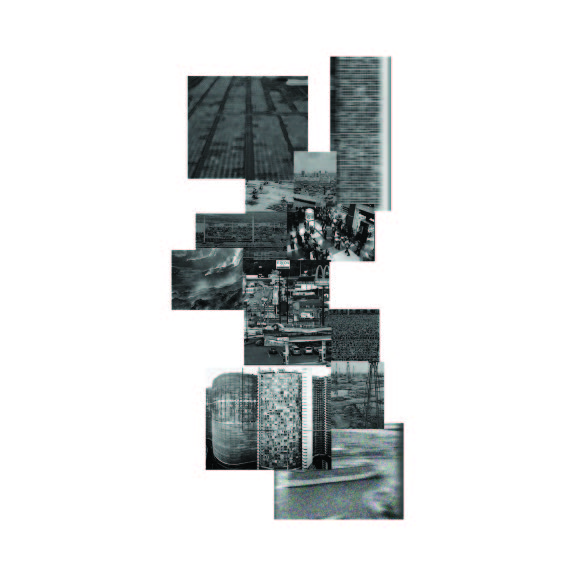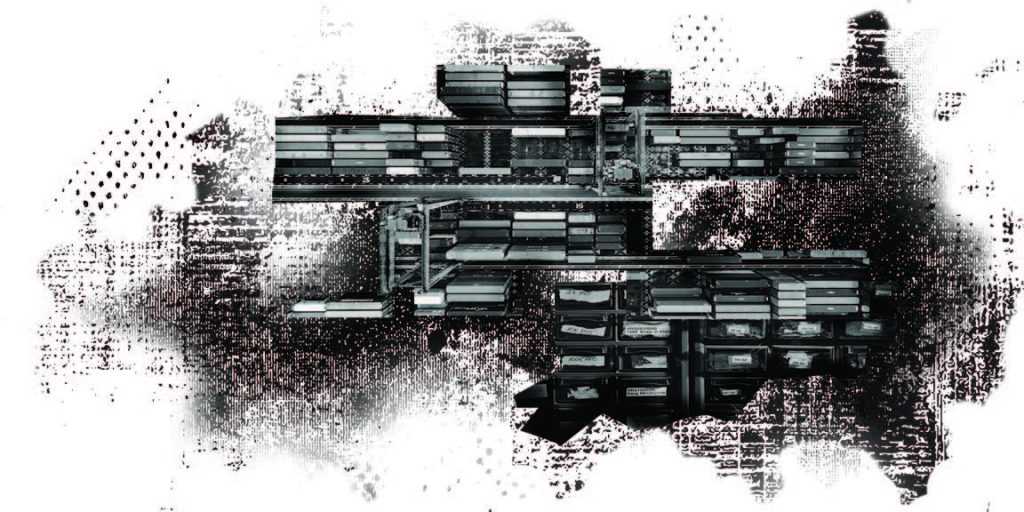
Architecture that is ubiquitous and transplantable across any environment or context, despite its adaptability, is vacant of expression. The Manifesto “Junk Space” by Rem Koolhaas explores this post extracted world of sprawling disconnected spaces absent of context and meaning. Intertwined conglomerations of consumerism, efficiency, and materialism meld together to become hyper-engineered spaces. In these spaces, the built environment becomes a commodity and designs become disposable. Inhabitants therefore become pacified amongst junk space through the use of climate control, signage, and consumer options, as they circulate through sedated atmospheres. These junk spaces however, are not defined by their aesthetic, but rather their containment of specific spatial logics. Koolhaas categorizes these logics as consisting of endless connected interiors, detached local or historical contexts, and highly commercialized spaces.
Despite its indispensable role in geographic connectivity and geography, the design of airports themselves evoke much of the opposite. Feelings of spacelessness and non-distinct character emerge throughout its circulation. The artificial continuity that these airport terminals produce is what Koolhaas describes as a web, one that is “without a spider; although it is an architecture of the masses, each trajectory is strictly unique. Its anarchy is one of the last tangible ways in which we experience freedom. It is a space of collision, a container of atoms, busy not dense” (Koolhaas, Junk Space, 182). Koolhaas focuses his critique on the Amsterdam Schiphol Airport and its blend of circulation amongst retail. Through being deliberately generic in design in order to direct constant traffic, what results is a space that becomes extremely sedated. The duty free shops, customs, and artificial lighting all promote consumer attitudes, and sedate those within to the overwhelming spacelessness. A paradox then arises where despite the vast and overwhelming container that encapsulates travelers, artificiality and lifelessness emerges due to this commodification.
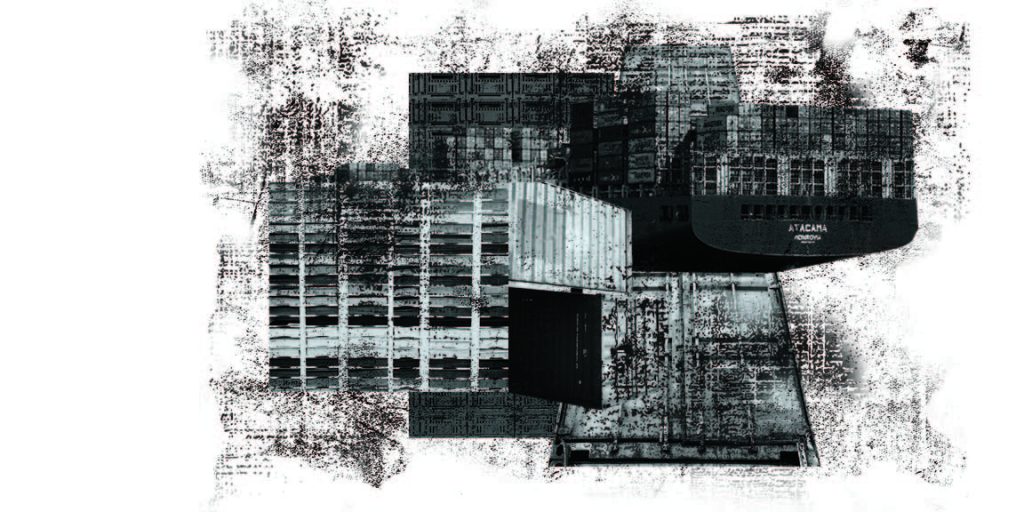
Junkspace is not only limited to how human behavior is affected within a space, but can be categorized through the way it is materialized amongst amiable settings. These hyper-engineered spaces possess all forms of living such as necessity, leisure, comfort, or sustenance. Junk space often appears however, in superfluous sectors. Large scale tourist ocean liners through their creation of microurbanisms detached from any historical or cultural context, become lost within a self-reinforcing design cycle based around consumerism. These well contained paradises base their architecture off a solid experience. What results is a form that appears alien as it departs from its isolated condition at sea and connects with coastal towns. In 2013, the impact of these ships on coastal communities throughout Venice spurred debate throughout the city. Not only was the environmental impact debated of these ocean liners, but also their place in the city and architecture. Concern over these ships towering over existing buildings such as Doge’s Palace and the rest of the skyline brought forth a moral debate over whether historic monuments deserved to be dwarfed compared to a touristic vessel. Despite these psychological impacts, the city is deeply dependent on these alien forms of architecture due to the economic benefits of tourism. This reinforces junk space as an architecture that is deeply intertwined with the market and economic impact.
Koolhaas focuses his analysis on spaces that create a sense of endless interior. These are seen in places with intense climate control and repetitive circulation. Spaces that follow a layout based on consumerism such as large scale shopping malls ignore its exterior context. Stores including Starbucks and Apple offer an international sameness in order to create the illusion of continuity throughout their brand, therefore erasing individuality. Koolhaas analyses the consumer experience of architecture, specifically the spaces in between the stores, and how they operate as a micro-urbanism. Malls, which mimic city life through its plazas, seating, and fountains, transforms an experience that was originally relegated to the public, into a private sphere. Public space therefore, also becomes a form of commodification. Koolhaas states, “The private and the public are shifting into a condition of either being controlled or abandoned” (Koolhaas, Koolhaas on Shopping). The privatized substitute of an originally public space reveals the residue of consumerist attitudes from mid-century modernism.
An analysis of Koolhaas’ manifesto reveals a greater insight into how commodification has become invasive to the larger built environment. Not only has commodification become a form of waste that has proved invasive to the planet’s ecology, but it has taken shape in the built environment through hyper-engineered spaces attempting to sell an experience, brand, or lifestyle. As the contemporary debate over environmental and cultural impact of consumerism intensifies, identifying these highly spaces acknowledges one of the subconscious sources of this crisis. We are not only producing junk, but unknowingly living amongst it.