A Critique of Convenience
Intimacy is not a convenient thing. It requires tedious observation, responsiveness, and sensitivity to change. To feel close and connected with something means to take longer routes, to wait and to sacrifice. We do these things not for our own benefit, but for the love of the things we sacrifice for.
As a people, we develop resistance to discomfort, and through those resistances find gratification, self worth, and connection. A bitingly cold walk fosters solidarity with people you walk aside and gratitude for the warm embrace of a building. When commuting afoot between 2 destinations, we become immersed in the journey and grateful for the destination. A slower pace encourages observation and meander, thought and connection.
Once inside of a car, surrounded by other motorists, our commutes become simplified and far more convenient. We can journey long distances separate from the discomfort of bad weather and crowded sidewalks. We do not worry about our fellow commuters, they no longer burden us and we cannot see their faces. We perceive the lines of the road, the signs which direct us, and the cars of fellow drivers. Our lives have thus been split between our homes and our destinations, the commute becoming a liminal period in between. This period of time does not define us and it does not inconvenience us, it is predictable and stable.
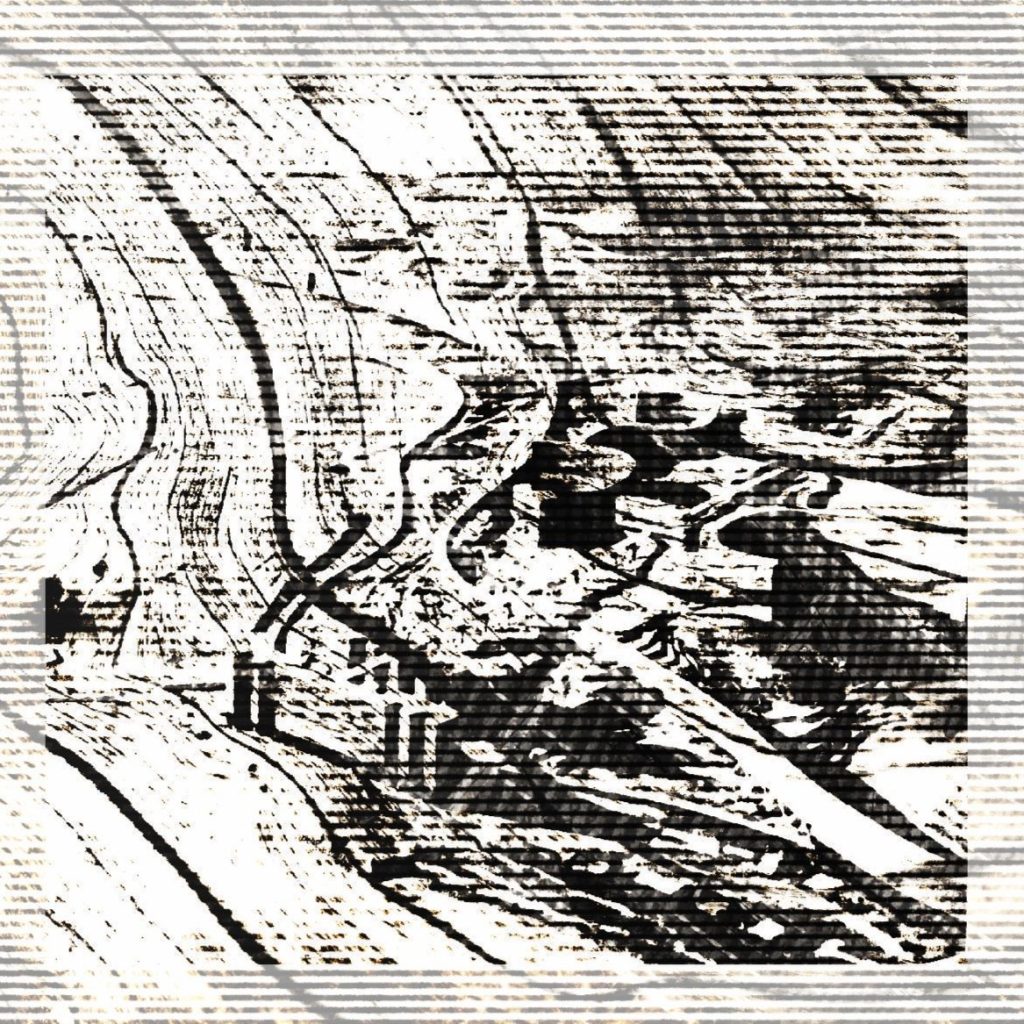
Modernists describe the space time experience. Car obsessed architects, notably Le Corbusier and Sigfried Gideon, argued that space and time were no longer static forces in the face of industrialization.1 Larger distances traveled in shorter periods and the functional forms which perpetuate this create feelings of immense change and speed. The ethereal excitement stemming from this development spurred the mass construction of interstates. This deeply affected the layout of America, especially the communities cut through in the process.
Plan Obus, developed by Le Corbusier in the early 1930s. Although intended to be conceived in Algeria, this project represents universal divides created through the implementation of interstates at a large scale.2
Today, a similar space-time revelation has arisen from the introduction of phones and the internet. Large quantities of information are exchanged at a rapid pace and over massive distances. This allows us to feel connected without the burden of real and immersive life.
The once inspiring space time experience has simplified neighborhoods into bland digestible outcomes. Easily understandable architecture is necessary to accommodate the rapid, half hearted observations made when glancing out of a car window or looking up from an iphone. As our disconnect from our environments grow, we move into a phase of large block lettering, flat facades, and a general loss of small detail. There is a clear correlation between walkable spaces and a care for community.
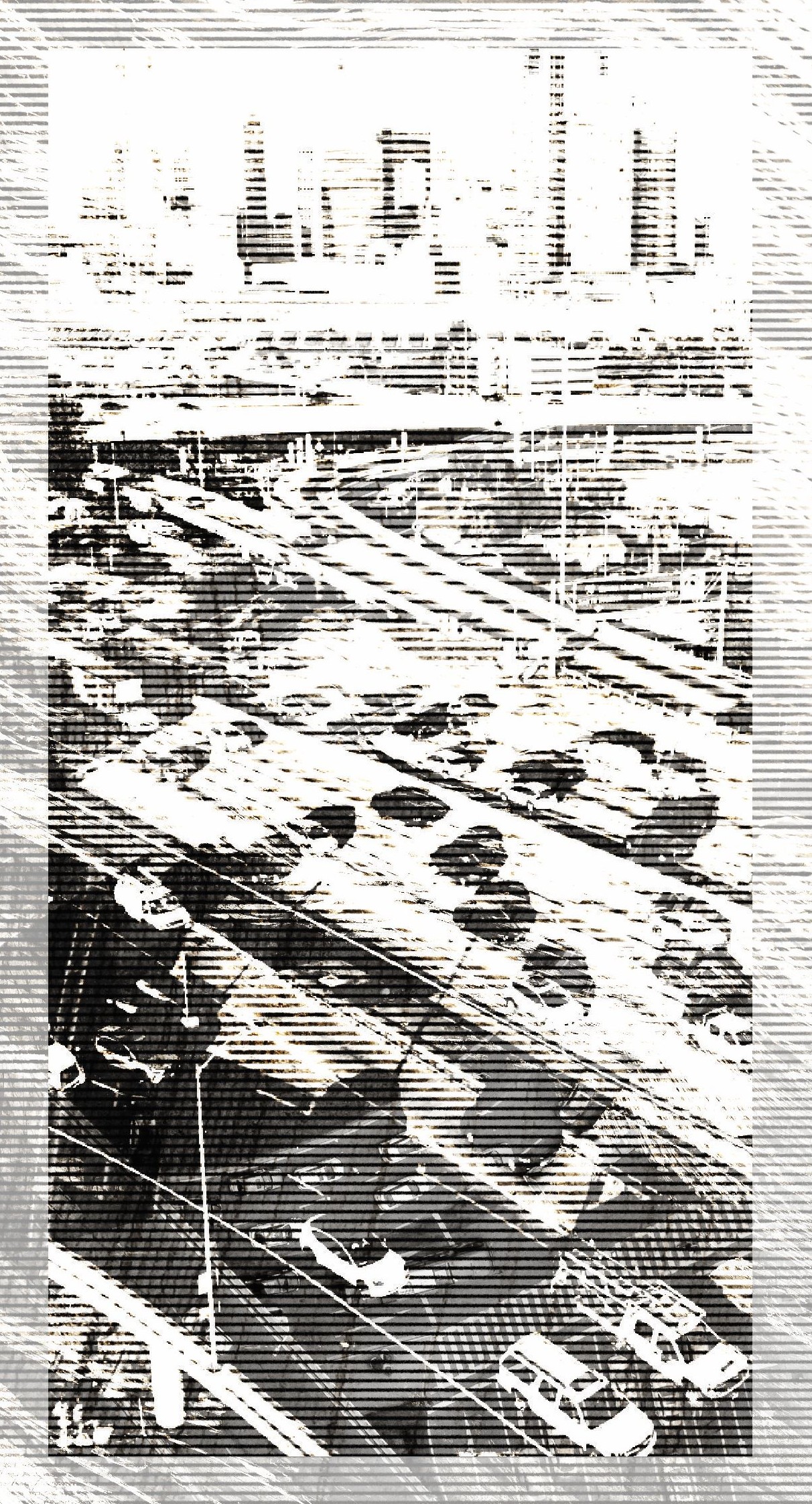
Has the I-10 Freeway in Los Angeles formatted a generic landscape?3
The 2D form created by a glance gains depth when perceived from the eyes of a walking commuter. From the street, with no tinted glass to shield us, we become wholly immersed in our surroundings and our community. Despite the perks of convenience, dopamine rushes from a screen, and the comfort of cars, they have made us less observant. A reversion to a slow and inconvenient space time experience may be what is necessary to return to the strong and neighborly communities in which the American dream seeks to be defined by.
Structure requires intimacy between architect, community, and form, and thus inconvenience becomes unavoidable in the creation of a fully functional building or urban plan. An intimacy exists which tools of efficiency allow us to avoid.
Inconvenience is difficult and slowness is uncomfortable, however, they force us to fall back in love with our surroundings.
- Tallack, Douglas. “Siegfried Giedion, Modernism and American Material Culture.” Journal of American Studies, vol. 28, no. 2, Aug. 1994, pp. 149-167. JSTOR ↩︎
- Brian Ackley, “Le Corbusier’s Algerian Fantasy: Blocking the Casbah,” Bidoun, Issue 6 (Winter 2006) ↩︎
- Contreras, Alex. “Instead of Reopening the I-10 Freeway, LA Should Have Reimagined It.” Bloomberg, 22 Nov. 2023 ↩︎
