“Rotting simulacra” traces humanity’s architectural estrangement from nature through ten conceptual stages. An elegiac reading of Jean Baudrillard’s 1981 book Simulacra and Simulation, the poem-article hybrid describes the genealogy of architecture by framing it as a disruption on nature’s ability to craft homes for living organisms. Appreciation of natural dwelling is perverted into self-referential hubris, creating an abyss so far between Mother and its children that only existential void persists.
[We have always possessed the insatiable need to know the inside of Mother’s Room. The shuddering thirst to see the swing of her hands as she crafts homes for her children. The longing to be with Her and create like Her, not to merely peek through a half-shut window.]
we have always wanted to be our Mother’s children.
One, Admiration
What a grace it is to have a Mother like ours
Her face, personality or name are secrets
Impossible not to love her nonetheless
We are permanently out of Her Room; it does not matter
Her craft covers the whole world; we are devotional
A generative organic force; needs no manmade naming
A system of homes; for each of her children
Flawless; thought-through
Scale respects children’s size and endeavors
Design decisions please the parts as much as possible
Matter acknowledges life’s cyclical nature
All living organisms have a nourishing place to live
Our gratitude is unmeasurable.
Two, Curiosity
Such perfection in design thinking makes us wonder how one could do so. How does one draw self-resolved homes for children of all scales, from
bacteria to lichen to rhinoceroses?
What skills does one design with to minimize conflict and unbalance,
like a self-regulating system in a puddle or lake?
What is the machinery and technique like to build structures so intricate and precise
light or heavy, like a spider web or a sequoia?
When did it start, will it end?
Void is the motor of desire, so they say
The Pull, yes, the Pull
Is a black hole, shines our light then devours it
Gravitational force, magnetic field, what is the matter in naming it? No word could ever explain our Curiosity
The Pull throws our bodies against Her Room
Walls could never let us in, so does the door
Mother’s secrets are not from our realm, we know
We will never be with her, but we long to be Her assistants.
Three, Assimilation
Our yearning was never satisfied, it could not ever be
Family roles exist, in the end
No collaboration can rule, like we dreamed
That fantasy can be buried, deep in the earth
Dreams never cease to breathe, nonetheless
They shapeshift into other forms
If we could not have the glory of shadowing
May we construct our own recreations
Eyes try to squeeze in apertures of Her Room
Pupils appear in the holes of the blinds
Ears touch the floor as we peek through the gap of the door Can we learn something from the dancing figure?
There’s nothing wrong with playing Mother
There’s nothing wrong with playing, Mother
We are just children, we are just sweet
We develop through make-believe.
Four, Aggrandization
Little wood branches form our primitive hut
Warmth holds us, warm like Her Room must be
…………To feel warm is to fulfill our homecrafting daydreams
…………To feel warm is to recognize ourselves as Mother’s children
The branches, they grow more
Time passes, more takes over
…………More children we can dwell in our playhouse
…………More space we take up from the soil
Slabs and walls slide apart
/…………/……/
…………Farther from the core, our playhouses reach for the clouds
…………Farther from the core, our rooms reach for the finisterre
With all of this scaling up,
…………Are these even playhouses anymore?
Five, Separation
An umbilical cord can never last forever
It dries out once scaling reaches rupture
A piece of withered skin is all that is left
The wind will take it far away eventually
And we will know
Separation
There is a limit for exchanging parts of a ship
Renewal is natural, part of Mother’s language
There might be no numerical limit to Theseus’ issue
But looking back and perceiving is enough
We can call this nothing but
Separation
How gorgeous would it be
To call it a matter of nomenclature
Couldn’t we call our craft the same word as Mother’s?
But it is no good, bearing false witness
We come from different places
Our “homes” come from different places
We only enlarge the
Separation
Our laurels are not to be proud of.
Six, Perversion
We bend a ruler into a lasso just for fun
The straight shape is lost, but it does not matter
We distort what stops us from fulfilling our desire-void
The original meaning is lost, but it does not matter
We can dwell as Mother did
The copyist attribute is ours, but it does not matter
We can create our own priorities and language
The result is pure Perversion, but it does not matter
When we pervert, we decide what matters
Machine-esque efficiency will guide us to a smarter future
[it might cause kafkaesque angst, but it does not matter…
Turning homes into products will keep the market flowing
[it might cause widespread suffering, but it does not matter…
Choosing who can access our buildings will keep them clean
[it might cause structural exclusion, but it does not matter…
Perversion is the one thing that matters.
Seven, Degradation
Our hunger once ached
We fed from the original source
Chewed
ChewedChewed
ChewedChewedChewed again
Until it was not the same food as the beginning
We swallowed our meal believing the void would be filled
It was not; we are afraid it never will
So we regurgitated and
Chewed
ChewedChewed
ChewedChewedChewed again
Until it was not the same perverted food as the beginning
We overlooked the distance from the original bite
It did not matter; maybe it never did
And better than the original recipe or the reheated copy
Was the rancid taste and the self-indulgent agency
Chewed
ChewedChewed
ChewedChewedChewed again
Until it was not the same regurgitated food as the beginning
[To chew is to repeat and to repeat is to chew and to chew is to repeat and to repeat is–
Eight, Resentment
And it is bitter
And it is your fault, Mother
You made your children to have the insatiable need to see inside your Room Yet, you never let us in
You could never let us in, you assigned the family roles this way
You could never be kind
There is a Room and its walls are there just to keep us out
Not because you need a Room for yourself
Only because you need a reason for yourself
A reason to exist
A Mother only exists if it has children
Positions mother and children have to have different attributes so they exist
You only exist because you created us
And what an evil creation
What an evil creator
You made your children with appetites that can never fade away
An appetite to be just like their mother
You made them create their little simulacra so they would feel slightly better
It once felt better
But it does not feel good
Because no matter the Aggrandization or the Perversion or the Degradation
No matter how we simulate your craft
It would never be like yours
We were, are and will always be impotent
You really hurt us, Mother Medea.
Nine, Awareness
Or not
We might just have hurt ourselves.
Our role was never to craft homes.
We cannot fight against our nature
Forgive us, Mother
Ten, Desolation
~~~~~~~~~~~~
Reconnection attempt failed~~~~~~
Meaning collapses
~~~~~~ Room remains closed
We are left to be suffocated by our~~~~
~~~~self-referential hubris
No ~~~~ guilt ~~~~ will make it go away
A copy of~~~~
a copy of~~~~
a copy of~~~~
a copy of~~~~
a copy of~~~
an original~~~~
~~~~Was there ever an original?
~~~~Was there ever a Mother?
~~~~~~~~~~~~
It does not matter
Being aware of our
~~~~~~ decay is enough to fill our bodies~corpses
Enough Desolation
~~~~~~~~~~~~~~
~~~~~~~~~~
Mother knew best
References
(Note: none of these pieces are explicitly cited in the text, but their influence is considerable)
Baudrillard, Jean. Simulacra and Simulation. Translated by Sheila Glaser, University of Michigan Press, 1994.
Laugier, Marc-Antoine. “An Essay on Architecture”. 1753
Cain, Ethel. “Pulldrone”. Perverts, Daughters of Cain Records, 2025.
Image credits
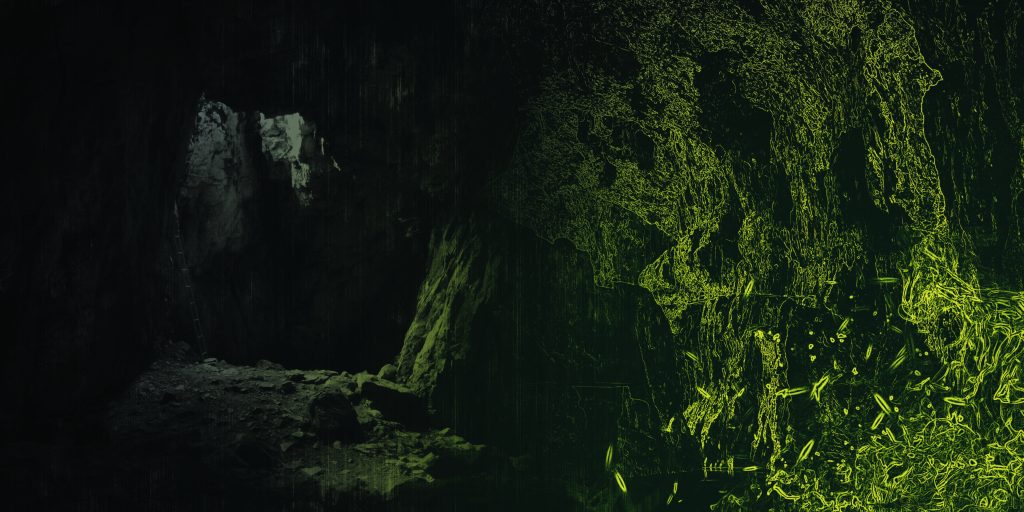
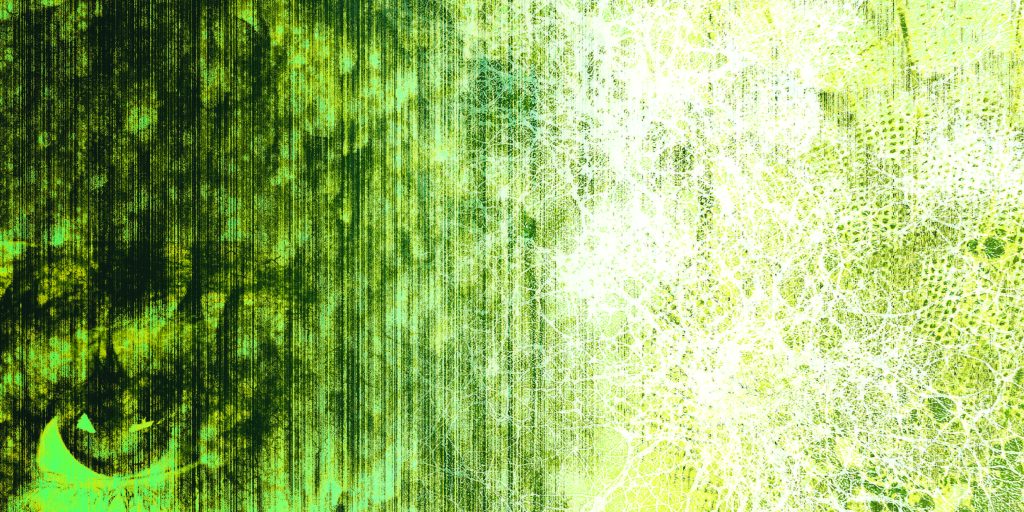
“Perversion”, 2025. Charcoal, digital manipulation. Gabriel Vazquez Caruso Gomes “Desolation”, 2025. Charcoal, digital manipulation. Gabriel Vazquez Caruso Gomes
