We Are the Hallway
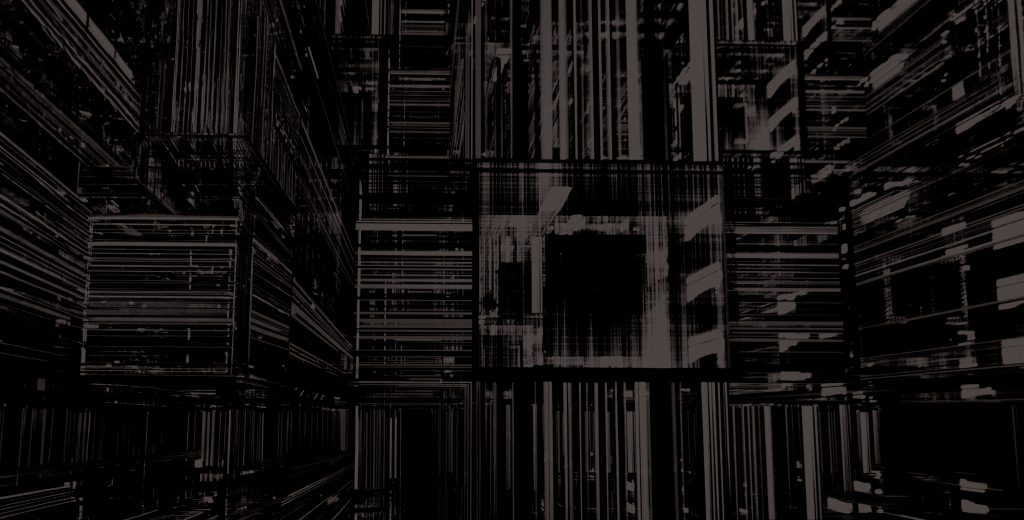
The Dimension That Has No Face
We learn to understand reality in layers.
The first dimension is a line: an infinite stretch with no width, no height, only direction. The second dimension introduces a plane: a flat surface defined by length and width. The third dimension, the one we inhabit, gives us a volume: length, width, and height. The geometry of a cube, the spatial logic of every room we have ever walked through. But the fourth dimension resists such a tidy description. It is often called incomparable, a realm that defies visual comprehension. In popular science and theoretical physics, the fourth dimension is frequently associated with time. But this association raises an unsettling question. When we describe dimensions, we speak in physical terms: lines, planes, volumes. Can time, something we experience but cannot touch, truly be understood as a physical dimension? And if so, what would it look like to stand inside it?
Christopher Nolan’s 2014 film Interstellar offers one of cinema’s most ambitious attempts to answer that question. In its climactic sequence, the protagonist Cooper, played by Matthew McConaughey, enters a tesseract. This tesseract is a high dimensional construct within a black hole. Time is no longer a river flowing in one direction but a spatial environment he can traverse. The scene is visually staggering and conceptually dense, but what makes it especially compelling is how naturally it leads itself to a reading through the lens of architecture. The tesseract is not merely a scientific conceit or a narrative device. It is, in a profound and theoretically grounded sense, a work of architecture. It is one that challenges every assumption we hold about what architecture is and what it can be.
To Dwell in The Fabric of Time Itself
When Cooper enters the tesseract, he finds himself surrounded by an infinite lattice of fragmented moments. Specifically, moments from his daughter Murph’s bedroom, repeated and layered across what appears to be a vast, navigable structure. Thin strips of time weave together like threads in a fabric, forming a rhythmic, patterned environment that resembles something when between a crystalline grid and a woven basket. Cooper moves through this environment not by walking on solid ground but by drifting, guided by sound, by light, by the emotional gravity of his memories. He hears as she discovers books falling from a shelf and declares the presence of a ghost. He is everywhere, and everything, all at once: a phrase that overturns the familiar complaint that one cannot be in two places at the same time. What is remarkable about this scene is how thoroughly it embodies the qualities of architecture without relying on any traditional architectural form. There are no walls in the conventional sense, no floors, no ceilings. Yet the space is structured. It has rhythm, repetition, orientation, and order. Cooper navigates it as one navigates a building: moving through rooms of time rather than rooms of brick and plaster. The tesseract is not a physical object, yet possesses all the spatial logic of one. It is architecture freed from the constraints of matter.
Memory as The Architect
The French philosopher Gaston Bachelard, in his landmark work The Poetics of Space, articulated a vision of architecture that extends far beyond physical construction. For Bachelard, a house is not merely a structure of wood, stone, and glass. It is a vessel of memory, emotion, and imagination. The spaces we inhibit are defined not solely by their dimensions but by the experiences they contain. It is that warmth of a childhood kitchen, the solitude of an attic, the security of a corner where one once read by lamplight. Architecture, in Bachelard’s philosophy, does not require physicality to be constituted as architecture. The idea of “Bachelard’s House” is that feeling, memory, and experience are themselves the materials from which space is constructed.
This framework maps onto the tesseract with striking precision. When Cooper floats through the higher-dimensional void, what gives the space its form and meaning is not any material substance but his memories of Murph. It is his experiences as a father, the weight of his absence, the desperation of his love. These emotions and recollections do not merely exist within the tesseract; they constitute it. The lattice of moments is not an arbitrary arrangement. It is Cooper’s perception, shaped by his emotional relationship to these specific instants in time, that gives the space its architecture. He does not stumble upon Murph’s
[formatting not finished]
