Fluid Constructs

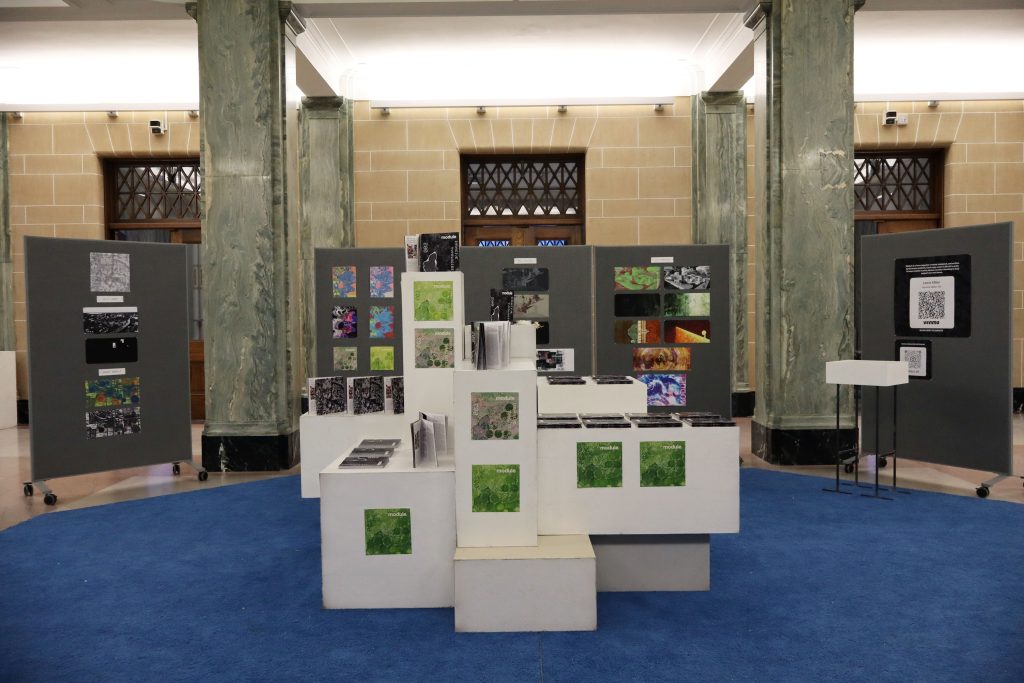
Written, edited, and designed by students passionate about advancing academic discourse in architecture and its related disciplines, Module is a biannual architectural magazine at Syracuse University that provides an outlet for emerging undergraduate student authors to engage in critical theoretical conversations on architecture.

Since Vitruvian time, architecture is the materialization of ideals as much as a symbol of power and hierarchy. The assumption of stability and firmness has fixated the discipline to a self-restraining way of practice, one that compulsively repeats and reinforces the power structure. Design produces flawless geometries freezing in the moment of completion. The language of form struggles to shake off the Euclidean ghost of wholeness and perfection. Yet buildings, like ourselves, are empirical entities subject to material forces and constant change. Through exploring the unstable, fragmented, and contingent nature of architecture, we disintegrate the image of firmitas in place of an alternative conception: fluid constructs. 

When an architecture is conceived as still and neutral, the “post-design” and the “unintended” force it to change and adapt. Uses are the core of architecture since its creation, and buildings are always in dialogue with their changing uses. Legal ownerships or creatorships, no matter how extensive, cannot fully own or control a space, as complexity naturally gives ways to unexpectedness. Buildings are then often misused–or how do you define misuse? Fluidity in uses questions the conventional mode of linear, unidirectional creation of architectural objects with cases of continuous creation. 

Mobile practices–pop-ups, inflatables, and barricades–raise questions of true and staged agency. Instead of reinforcing, these structures uproot. Their physical instability has the potential to resist and, on the flipside, ease into a form of experience economy of novelty that produces the illusion of adaptability. 

Fictions and narratives offer ways of metaphorical re-imagining architecture in flux: architecture becomes the metabolic projection of human bodies, 4th dimensional beings that defies all presuppositions, and the symbol of trauma and transformation in the context of modernization.

An architecture is never “complete.” By handling instability with openness and curiosity, this issue hopes to contribute to an ongoing conversation on the “ongoingness” of architecture.